headshot_sarahlacy.jpgI recently interviewed Sarah Lacy, BusinessWeek reporter, Tech Ticker host and author of the book "Once You're Lucky, Twice You're Good: The Rebirth of Silicon Valley and Rise of Web 2.0" (scheduled for release tomorrow).

Sarah and I had an in-depth conversation about her new book, life in Silicon Valley, Twitter, her infamous SXSW interview, and much more.

This article is part 1 in a series.

You have a new book coming out, could you tell us more about it?

The book is called "Once You're Lucky, Twice You're Good: The Rebirth of Silicon Valley and Rise of Web 2.0". While it's about Silicon Valley, it's really written for people outside Silicon Valley who heard all about the dotcom bubble, heard all about the bust and then heard nothing about Internet companies for a long time. Then out of no where we started hearing about MySpace, YouTube and Facebook, a lot of these modern Web 2.0 companies. And there were a lot of misunderstandings about what this wave of companies meant. There were a lot of stories saying it's like 1999 again, but it couldn't be farther than 1999 again...

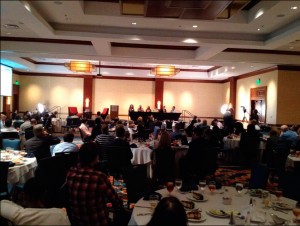
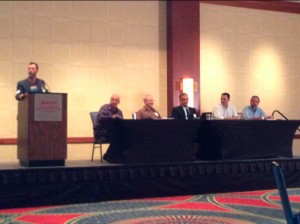
businesslaunch_logo.jpgThis Wednesday, Thursday and Friday, I will be a judge for the semi-finals of the GRA/TAG 2008 Business Launch Competition.

Applicants, then semifinalists, then finalists are competing for a prize that includes a $100,000 cash award and services valued at an additional $200,000, for a total grand prize of $300,000.

This event is conducted by the The Georgia Research Alliance and the Technology Association of Georgia with the goal of supporting the creation and growth of new technology companies in Georgia.

In addition to the cash and services award, entrants have an option to work with a mentor to further develop and refine their business plan. A group of Georgia's most successful high tech entrepreneurs has agreed to serve as mentors.

A preeminent panel of judges consisting of business leaders, entrepreneurs and venture capitalists includes:

Semi Final Judges:

  • Don Addington, Managing Partner, The Addington Group

  • Edward Croft, Croft & Bender

  • Aaron deSouza, Partner, Grant Thornton

  • David Eckoff, CEO, Revolutionary Ventures

  • Joe Fiveash, EVP and GM, The Weather Channel Interactive

  • Price Harding, Partner, Carter Baldwin

  • Jeff Harris, Harbert Ventures

  • Mark Morel, Chairman and CEO, XOSphere

  • Sig Mosley, President, Imlay Investments

  • Guido Sacchi, CIO, CompuCredit

  • Martin Tilson, Managing Partner, Burr & Foreman

  • Rik Vandevenne, Principal, River Cities Capital Funds

  • Finals Judges:

  • Adam Coyle, Operating Partner, Advent Group

  • Tom Crotty, General Partner, Battery Ventures

  • Cynthia Glassman, U.S. Department of Commerce

  • Mark Johnson, former Vice Chairman, CheckFree Corporation

  • Christopher Klaus, Founder & CEO, Kaneva

  • Ann Lamont, Managing Partner, Oak Investment Partners

  • Fred Sturgis, Managing Director, H.I.G. Ventures


  • Bookmark and Share


    I find myself using Twitter much more for communication and collaboration - and using e-mail, IM and blogs less.

    But I am facing what I'd like to call the "Twitter Dilemma": what is the maximum number of people you can reasonably follow on Twitter?

    On one hand, a lot of people I know say 100-200, and anything beyond that and they aren't able to really follow what's happening. Interestingly, Dunbar's Number suggests that the max is around 150.

    On the other hand, I look at people like Chris Brogan, Robert Scoble and Jeff Pulver who follow many thousands of people. The mere fact they follow so many people... seems to attract even more people who in turn follow them, further building their popularity.

    But does this really need to be an either or proposition? Can you have your Twitter cake and eat it too?

    What I really want from Twitter is to be able to "follow" several hundred people (that I check now and then as I have time) - and have a way to segment the people I'm following with a subset of "favorite people I'm following" (close friends, family and people who always have something compelling to say), a subset that I don't want to miss anything they Tweet.


    Bookmark and Share


    How do YOU deal with the "Twitter Dilemma"? Post your ideas in the comments section.


    If you're using Twitter in an interesting way, I'd like to follow you! Get in touch here.


    Wikinomics bookATLANTA - I recently attended a presentation by Don Tapscott, author of the best selling book "Wikinomics: How Mass Collaboration Changes Everything". Tapscott explained how businesses can tap the potential of the emerging networked economy and its self-organized, mass-participatory communities. A digest of some of the more interesting insights I heard from Tapscott, along with my own observations:

  • The corporation as an institution chosen to create goods and services is going through massive change.

  • At the same time, the knowledge, resources and computational power of billions of people are self-organizing into a massive collective force. The Internet is becoming the first global platform for collaboration in history, interconnected and orchestrated through blogs, wikis, chat rooms, peer-to-peer networks and personal broadcasting.

  • Businesses that know how to tap into this self-organizing ecosystem of partners will co-create and peer-produce value for customers in ways that companies relying on internal capabilities and tightly-coupled partnerships will not be able to match.

  • A fundamental change in technology: the old web was accessed via the PC. The new web is accessed via smart communication devices.

  • The next generation is driving change. Kids today have no fear of technology because it is like the air - it is just there. The population isn't merely aging as many people think, it is bifurcating: getting older (the baby boom generation) and getting younger (the baby boom echo). In fact, the echo (80 million strong) is larger than the boom, and these kids are going to dominate the twenty first century. Their defining characteristic: they are the first generation to grow up online.

  • For the echo generation, time spent online is taken away from time spent watching TV. The echo generation comes home from school and turns on the computer and multi-tasks. They watch TV differently - it is passive and in the background. Most important, they process information differently during a key developmental stage for their brains, and this affects synapses.

  • Tapscott says that when he was a child, he was "an expert on model trains"; kids today are experts in every institution! Unlike previous decades known for their "generation gap", today there is a "generation lap". For the first time in recent history, kids and their parents listen to the same music on their iPods, with overlapping musical taste. Having said that, kids are lapping their parents in everything digital.

  • Looking at the audience of mostly boomers hearing Tapscott's presentation, I couldn't help but think that they are indeed being lapped. And worse, they don't know what they don't know. Are YOU part of the boomer generation and are you being lapped? How will YOU keep up? My prescription: experiment with new ways of communicating and collaborating. Start a blog. Try out Twitter or Facebook. As I often say in my keynote speeches: "Change means the time to innovate is now."

  • A young panel participant once told Tapscott: "E-mail is yesterday's technology. Today's generation communicates by text message, IM and Facebook. A good use of e-mail? "Sending a thank you to your friend's parents," she said. Interestingly, even I am using text messaging and Twitter much more, often replacing e-mail with those a text or Tweet. I recently guest lectured at Kennesaw State University and asked them what they thought about the trend. That group, born in the late 1980's, said Tapscott's young panel participant is not representative of their generation. Sure, they use text messaging and Facebook (some of them multi-tasking during my lecture!). But they all use e-mail regularly.

  • The Internet is a platform for collaboration, and Tapscott banned the word "websites" in his company. "None of you should have websites," Tapscott said. "You should have communities." That's an interesting concept. When I was building the online sports network Rivals.com in 1999, the secret of our success was we didn't just create team sport websites, we created communities of fans around topics. I found most traditional journalists who grew up in the world of print struggled with creating and growing online communities, while people who had immersed themselves in online discussions were naturals with online communities.

  • All this affects how we innovate and invent new products. It used to be that we all worked for companies because the transaction costs for finding the right information, coordination and collaboration were higher outside the company than inside the corporation. All that has changed with mass collaboration on the Internet - and companies need to act as peers instead of superiors. Mass collaboration requires: peering, being open, sharing some of your intellectual property and acting globally.

  • We're in the age of the wiki workplace and we need to transform how we do technology inside the corporation. "If you have people wasting time on Facebook, is that a technology problem?" What a great opportunity to figure out how to use social networking in the workplace. Unleash the power of human capital locked into old constraints.

  • Tapscott says everyone in a company should have a blog. Believe and trust in your people. In three years, his company hasn't had any problems with that approach. I compare that with CNN, which reportedly recently fired producer Chez Pazienza for blogging. CNN's policy as described in published reports: employees may not write anything that appears elsewhere, without first having it reviewed through CNN's "Standards & Practices Department". This centralized command and control management is in stark contrast to the Tapscott's recommendations.

  • One of my favorite comments from Tapscott: at his company, they don't have management meetings, instead the run the business via a wiki. With everyone traveling and based in different locations and time zones, this works well for them. Think about your own company: do you run the company via centralized management meetings? Could you experiment with replacing the meetings with an online wiki? I'd love to hear from you if you've tried this, how did it work out for you?

  • Tapscott concluded by saying that there is a crisis of leadership. "Welcome the future, for soon it shall be the past."


    Bookmark and Share


    What are YOUR thoughts about Don Tapscott and Wikinomics? Post your thoughts in the comment section.


  • Today and this weekend, I'm at Las Vegas Motor Speedway as a guest of execs at LVMS, attending my first NASCAR event. I'll be Twittering on location with my behind the scenes observations and impressions of the event.

    Krishna Bharat photo ATLANTA - I'm attending the Symposium on Computation & Journalism at Georgia Tech, with a capacity crowd of 230 people focused on the intersection of journalism and computer science.

    Krishna Bharat, principal scientist at Google and creator of Google News, was a keynote speaker Friday. Some of the interesting points I heard:

  • Google doesn't want to own content, it wants to be the intermediary that brings people to content.

  • Early on, Google realized that portals wanted to keep people on their sites as long as possible. But the company, at the highest levels, believed that "trapping" people on a site is shortsighted.

  • Bharat is a computer scientist, but he didn't talk just about engineering. "Many perspectives, providing contrasting viewpoints, creates an appetite for news and makes you want to read more," said Bharat. "Perspectives educate, knowing what others believe matters."

  • News is real time and fragmented and bringing it all together is hard to do. Google's process:

    Crawl (gather news); cluster (group articles by story) rank (determine how important the story is by aggregate editorial interest). Within stories, story importance in a given edition is based on editorial interest, local relevance and story freshness. Articles are ranked by originality, freshness, quality of source and localness of source.

  • Google achieves scalability by creating one algorithm and applying it to multiple editions.

  • Integrating Google News in universal search was very important for Google News, because many people don't think of going to Google for news. (This is smart, and is similar to how RealNetworks leverages its high traffic Real.com property to drive users to new services.)

  • Google recently introduced new features: local news; and a Facebook app to browse news while within Facebook and allowing users to track top stories and share them with friends.

  • Asked what news publishers can do to get ranked by Google News, Bharat said: try to be original, too much reporting is rehashing. The Internet enables niches. Find topics that are underserved.

  • Bharat says one thing he has learned about the process of innovation during his time at Google: "innovation happens when you put people together."

    RELATED STORY: Innovation at Google: Interview with Marissa Mayer, VP Search Products & User Experience


    Bookmark and Share


    What do YOU think about Google News? Post your ideas in the comments section.


  • Marissa Mayer photo I recently had a chance to interview Marissa Mayer, Vice President at Google, who leads the company's product management efforts on search products. The 90 minute interview was filmed before a live audience at Turner Studios, and I'll publish excerpts here over the next few weeks.

    DAVID ECKOFF: How do you evaluate and screen new ideas and products?

    MARISSA MAYER: There's a vibe that comes from winning ideas. When I break it down:

    First, I think of it as a new company within Google, to understand how we should invest. Is there a core piece of technology that would be interesting and repurposeful in any number of ways? For example, with 1-800-GOOG-411, it's expensive to process the calls and it might not pan out; but we're building a database that will make it possible to build a more robust speech to text model, which could be used in any number of ways... iPhone based search... it could help us deploy car based computers... it could help us do things like take videos and generate closed caption transcripts off of them rather than having them generated by humans.

    Second, is this the kind of product that is easily articulatable and that will grow through word of mouth? Meaning, is it a very simple concept that people can express to each other on the street? Very basic concepts that are easily understood and used, instantly intuitive.

    The third thing I look for: the overall vibe from the team. When you look at start ups, and founding teams, a lot of times it comes down to the verve and tenacity of the team. Eric Schmidt, our CEO, and I were talking once and I asked him "When you're looking across the entire company, what are you looking for? My area has become so broad, and it's really hard for me to be an expert in everything that I'm hearing about. I can't even imagine looking over the entire company. What do you look for?" And he said, "Sometimes, it really comes down to the vibe in the room. I'll just sit there and when a really good team comes in, I just get this visual image in my head of someone trying to take the mountain. I literally will see the presenters there, and I feel like they're just so fired up that in my head I unconsciously get this image of that team really charging the mountain and no one is going to be able to knock them back."

    So that's really what you want: a piece of repurposeful technology; and a very simple and easy to understand idea; and you want a great founding team that's really fired up. So fired up that they won't take no for an answer and they won't fail.

    I have a lot of friends who are entrepreneurs. I asked, "How do you decide when to start a company? When does that actual moment happen, when you start a company? I think that same thing is true when you start a product or a team." And he said, "The moment that you start a company is the moment you won't take no for an answer."


    Bookmark and Share