UPDATE: the original article below describes my training with SCT as of August 2007. Here are additional links to updated results:
- Fitness Results Over One Year: Transforming My Body Through Fitness and Nutrition (January 13, 2008)
- Strength Training: Unpacking New “Streamline SR” Fitness Equipment (August 25, 2007)
- Fitness Results: Break Out Quarter! (Quarterly report, August 29, 2007: gained another 6.1 pounds of muscle; lost another 2.85 pounds of fat):
- Strength Training with Static Contraction Training: results after ten months (Quarterly report, May 17, 2007: gained another 1.2 pounds of muscle; lost another 2.95 pounds of fat )
- Strength Training with Static Contraction Training: results after four months (November 23, 2006)
I’m measuring my fitness results quarterly via hydrostatic analysis, which is the gold standard and most accurate method for measuring body composition.
Results Over The Last Three Months:
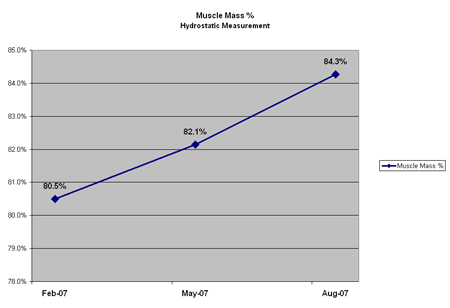
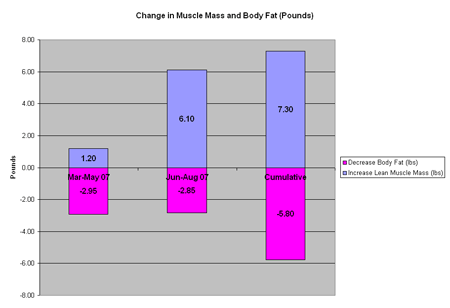
- Lean Muscle: gained another 6.1 pounds of muscle (excellent for my 162 lb frame; following Static Contraction Training, a method of strength training that I first heard about from Tony Robbins. SCT has enabled me to get the greatest results in the least amount of time each week. To learn more about how to get started with Static Contraction Training, I recommend Pete Sisco’s excellent resource of training information on Static Contraction Training.
- Fat: lost another2.85 pounds of fat (also good for my frame)
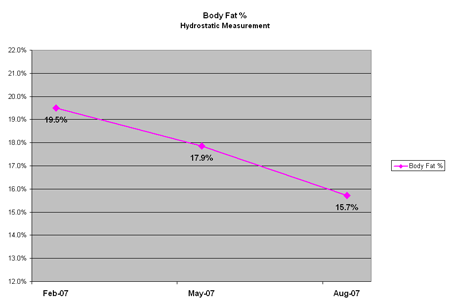
- Body fat %: reduced from 17.8% to 15.7% (in the 85th percentile for my age; further improvements are for athletic or cosmetic purposes, not necessarily for health)
- Cumulative Over Six Months: Gained 7.3 pounds of muscle; lost 5.8 pounds of fat.Of course, one or two quarters is a short period of time. Longer term, if I continue at the same pace over the next six months, then for the year I will gain more than 14 pounds of muscle and reduce almost 12 pounds of fat. Net, I will have transformed my body through fitness and nutrition.Charts that show my results over the past six months, since February 2007:
Body Fat Percent:
Lean Muscle Mass Percent:
Change in Lean Muscle and Body Fat in Pounds:
BREAKING IT DOWN: How does hydrostatic body composition measurement work? According to the Department of Kinesiology and Health at Georgia State University:
“This method uses Archimedes principle which states that when a body is submerged in water, there is a buoyant counter force equal to the weight of the water which is displaced. Because bone and muscle are more dense than water, a person with a larger percentage of fat free mass will weigh more in the water and have a lower percent body fat. Conversely, fat floats. Therefore, a large amount of fat mass will make the body lighter in the water and have a higher percent body fat. If each test is performed correctly according to the recommended guidelines, there is a +/- 1.5% error.
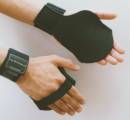 Related strength training tip: I have been using NewGrips to cushion my palms and fingers and add strength to my grip so I can lift even heavier weights. NewGrips are made of neoprene and I’m finding are much better than traditional weight lifting gloves. I bought these, use them every workout and think these are the best weight lifting grips around. If you decide to get a pair, I’m linking to NewGrips with an affiliate link, meaning I get a token commission if you click from my link and purchase a pair of NewGrips from the manufacturer. – David Eckoff
Additional links:
Fitness Results Over One Year: Transforming My Body Through Fitness and Nutrition (January 13, 2008) Strength Training: Unpacking New “Streamline SR” Fitness Equipment (August 25, 2007) Fitness Results: Break Out Quarter! (Quarterly report, August 29, 2007: gained another 6.1 pounds of muscle; lost another 2.85 pounds of fat): Strength Training with Static Contraction Training: results after ten months (Quarterly report, May 17, 2007: gained another 1.2 pounds of muscle; lost another 2.95 pounds of fat ) Strength Training with Static Contraction Training: results after four months (November 23, 2006)